Many fire drills take place in clear corridors with lights on and exit signs fully visible. A real fire can be very different. Smoke can fill corridors and stairwells, reduce visibility and make breathing difficult. This article explains basic guidance for evacuating in smoke and how VR training can help workers practise it.
Why Smoke Is Dangerous
Smoke from a fire contains hot gases, fine particles and toxic substances such as carbon monoxide. Inhaling smoke can cause confusion, loss of consciousness and serious injury. Smoke also reduces visibility, which makes it harder to find exits and can cause people to become disoriented, even in a familiar building.
Because hot smoke rises, the air closer to the floor is usually cooler and clearer in the early stages of a fire.
Smoke can also spread quickly through stairwells, ceiling voids and ventilation systems, so areas far from the fire itself may be affected. This is one reason why closing doors during evacuation is recommended.
Basic Guidance for Evacuating in Smoke
General fire safety guidance for evacuating in smoke includes:
- Stay low. Move below the smoke layer, crawling if necessary.
- Use the nearest safe exit. Know at least two exits from your work area.
- Feel doors before opening. If a door or handle is hot, do not open it and use another route.
- Close doors behind you. This can slow the spread of fire and smoke.
- Do not use lifts. Use stairs designated for evacuation.
- Follow walls and exit signs. In low visibility, keeping contact with a wall can help with direction.
- Do not go back inside. Once out, go to the assembly point and report to the warden.
Organisations should base their training on their own evacuation procedures and the guidance of local fire authorities.
Why This Is Hard to Practise
Low-visibility evacuation is difficult to include in conventional drills:
- Artificial smoke machines require preparation and may trigger alarms or affect sensitive equipment.
- Drills with reduced visibility carry a risk of slips and falls.
- Staff may not take drills seriously when conditions are clearly artificial.
As a result, many employees have never practised finding an exit when they cannot see clearly.
How VR Training Helps
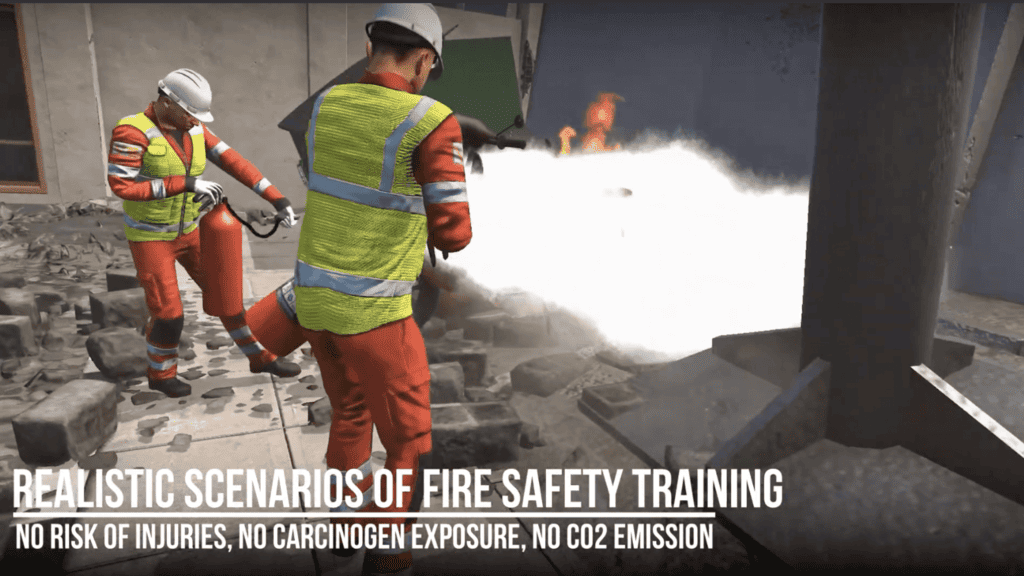
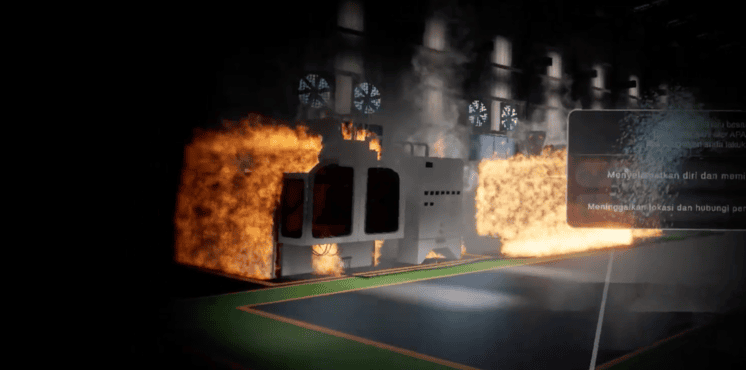
VR training can simulate smoke and reduced visibility without any physical risk. VGLANT lists fire evacuation and fire response among its VR safety modules. Its website describes zero-risk training, in which trainees are not exposed to fire or other hazards, and immersive scenarios intended to produce realistic responses.
In a VR evacuation scenario, a trainee may need to:
- recognise the alarm and stop work
- choose an exit and move toward it
- respond when smoke reduces visibility
- check a door before opening it
- choose another route when one is blocked
- reach the assembly point
VGLANT describes its scenarios as randomised, so the location of the fire and the condition of routes can change between sessions. This prevents trainees from simply memorising one path.
Measuring Evacuation Decisions
VGLANT’s platform records performance metrics such as task duration, reaction time and actions taken. In a smoke evacuation scenario, these can show:
- how quickly the trainee responded to the alarm
- whether they stayed low in smoke
- whether they checked doors before opening them
- whether they attempted to use a lift
- how long it took to reach safety
Supervisors can use these records to identify common mistakes and adjust training.
Making the Scenario Relevant
VGLANT’s bespoke services convert existing SOPs into VR scenarios. For smoke evacuation, a scenario based on the organisation’s own layout and procedures is more useful than a generic building, because trainees practise routes and decisions that apply to their workplace.
Limits of VR
VR does not reproduce heat, the smell of smoke or the physical effort of crawling over long distances. It also does not test real alarms, signage or emergency lighting. Regular fire drills and inspection of fire safety equipment remain necessary.
Summary
Evacuating in smoke requires specific behaviours that are rarely practised in clear-corridor drills. VR training allows workers to rehearse these behaviours safely and repeatedly, with recorded results for review. Organisations interested in VR evacuation training can contact VGLANT for a demonstration.