There’s a problem in coal mining Indonesia that rarely makes headlines but quietly shapes every production target: there aren’t enough skilled heavy-equipment operators to go around, and training new ones the traditional way is slow. As experienced operators retire or move on, and as operations expand, the pipeline of capable replacements struggles to keep pace. The shortage doesn’t announce itself dramatically. It shows up as longer onboarding times, equipment sitting idle waiting for a qualified operator, and the quiet risk that comes from putting under-trained people in the seat of a machine that weighs more than a house.
Why the traditional pipeline is slow
Building a competent heavy-equipment operator the conventional way takes months, and the reasons are baked into the method. A trainee has to learn on real equipment, which means taking that equipment — and often an experienced operator to supervise — out of production. Real-machine training hours are expensive, limited, and risky. Mistakes during training can damage costly equipment or worse. So mines ration the hours, and rationed hours mean a slow drip of new operators that can’t easily be turned up when demand spikes.
The result is a structural mismatch. When an operation needs to scale up, or when several experienced operators leave at once, the training system simply can’t produce qualified replacements fast enough. The bottleneck isn’t a lack of willing recruits — it’s a lack of throughput in the training pipeline itself.
Where immersive training changes the throughput
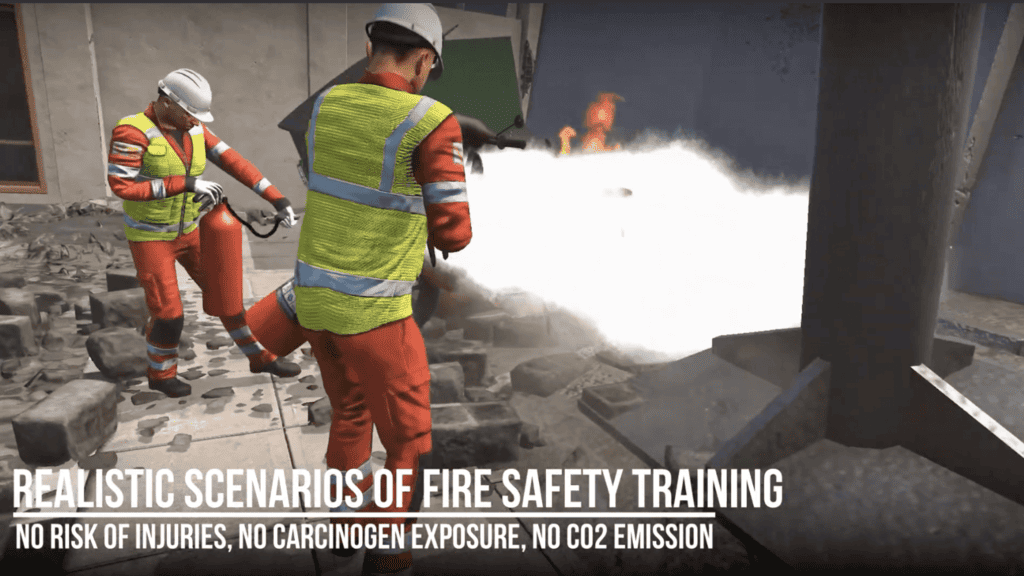
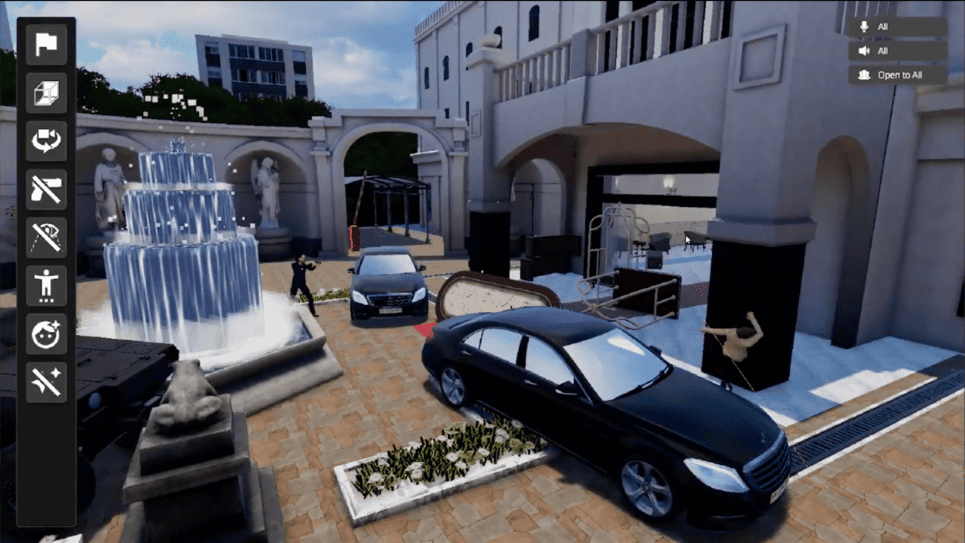
This is the specific constraint VR is good at loosening. Because a VR simulator doesn’t consume real equipment, real fuel, or real production time, a mine can train many operators at once and run as many repetitions as the curriculum needs. A trainee can master cabin controls, learn the components, walk through inspection routines, and rehearse work procedures dozens of times before ever climbing into a real cab — so their eventual real-equipment time is shorter, safer, and more productive.
Indonesian firm Virtu has built exactly this kind of VR operator training for the local market, and deployed it with operators including the mining contractor BUMA. The logic is straightforward: if the bottleneck is training throughput, the fix is a training method whose throughput isn’t capped by equipment availability. A portable VR setup lets a mine build its own operator pipeline on site, at a pace it controls, rather than waiting in line for scarce real-machine hours.
The part VR doesn’t solve
It would be dishonest to claim VR makes the shortage disappear. A headset doesn’t produce a finished operator — final competence still requires real-equipment experience and proper certification, and there’s no shortcut around the genuine seat time that turns a trained novice into a trusted operator. VR also can’t fix the broader workforce dynamics: demographics, wages, the appeal of the industry to younger workers. Those are bigger problems than any training tool.
What VR does is attack the one part of the shortage that technology can actually move: the speed and cost of getting a recruit from zero to ready-for-real-equipment. By front-loading the learning into a safe, repeatable, scalable environment, it shortens the slowest, most expensive stretch of the pipeline. For an industry where every idle machine waiting on a qualified operator is lost production, compressing that stretch is worth real money — and it’s a lever mines can pull themselves, without waiting for the labor market to fix itself.
The operator shortage in coal mining Indonesia is a workforce problem, not a technology problem. But the slowest part of the fix is a training problem — and that part, at least, has a tool built for it.